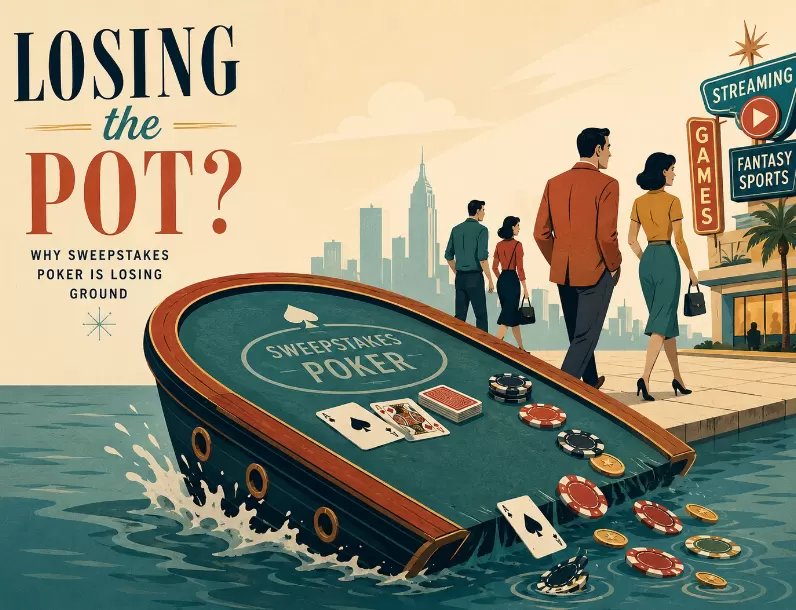

Two years ago, sweepstakes poker looked like the cheat code American players had been waiting for since Black Friday. Buy some Gold Coins, get some Sweeps Coins, play real poker for real redeemable prizes in 45 states, all without anyone needing a gambling license. The model printed money. Analysts at Eilers & Krejcik pegged the whole sweeps segment at roughly $3.1 billion in gross gaming revenue in 2022 and projected it to hit $11 billion by 2025.
Then the states started doing math of their own, and the party got raided. As of mid-2026, sweepstakes poker is not just losing market share. It is losing entire markets, one governor's signature at a time.
The Domino Run Nobody Reversed
Montana went first, passing its ban in May 2025. Then the dominoes started falling with depressing rhythm: Connecticut, New Jersey in August, California in October, New York in December, and then the 2026 legislative sessions turned it into a stampede. Louisiana, Tennessee, Indiana, Maine, all done. Oklahoma's ban lands in November 2026. Add the legacy no-go states of Washington, Idaho, and Nevada, and at least 17 states have now banned or effectively restricted the model, with more bills moving through Maryland, Massachusetts, and elsewhere.
California was the kill shot. Assembly Bill 831, effective January 1, 2026, did not just ban dual-currency sweepstakes in a state worth an estimated 17 to 20 percent of the entire US sweeps market. It extended legal liability to payment processors, geolocation providers, and marketing affiliates. Suddenly it was not just the operators sweating. It was everyone who cashed their checks.
New York followed the same playbook in December, with penalties up to $100,000 per violation and liability reaching media partners and affiliates. The bill explicitly named poker as a covered game, just in case anyone wanted to argue.
Why Poker Gets Hit Harder Than Slots
Here is the part that matters if you actually play cards. A sweepstakes slot site losing California loses California's revenue. A sweepstakes poker site losing California loses California's players from every table in the country.
Poker is a liquidity business. Every state that exits shrinks the shared player pool for everyone still standing, which means longer tournament registration, dead cash tables at off-peak hours, and worse guarantees. After the California ban, PokerScout projected the sweepstakes poker player pool would shrink by roughly 30 percent from the impending bans alone, and that estimate came before Tennessee, Indiana, and Maine finished the job. Slots can survive as a patchwork of state markets. Poker cannot. The network effect that made sweeps poker great on the way up is now the anchor dragging it down.
The Operators Are Bleeding From Every Direction
The state bans are just the loudest problem. The quieter ones might be worse.
Lawsuits everywhere. By March 2026, more than 100 class action lawsuits were active against sweeps operators nationwide. Utah alone saw 23 filed in federal court in a single month. The favorite legal target is VGW Holdings, parent of Global Poker, Chumba Casino, and LuckyLand Slots, which faces dozens of cases plus a lawsuit from the state of Louisiana seeking over $30 million in unpaid taxes. The core legal theory attacks the foundation of the whole model: plaintiffs argue the free entry methods are deliberately cumbersome window dressing, and that these platforms are gambling businesses wearing a promotional-sweepstakes costume.
The suppliers are running. Pragmatic Play, one of the biggest game content providers in the segment, pulled out of the entire US sweeps market in September 2025. Evolution and Hacksaw Gaming yanked their content from California ahead of the AB 831 deadline. When the companies that build the games decide the legal exposure is not worth the invoice, that tells you where the smart money thinks this ends.
Enforcement has teeth now. Illinois sent cease-and-desist letters to 65 operators in early 2026, naming Global Poker, Stake.us, Chumba, and the rest of the usual suspects. The initial compliance rate was a comedy: two operators out of 65 actually geo-blocked the state within two weeks. Illinois responded by pushing a bill to reclassify sweeps products as illegal gambling devices.
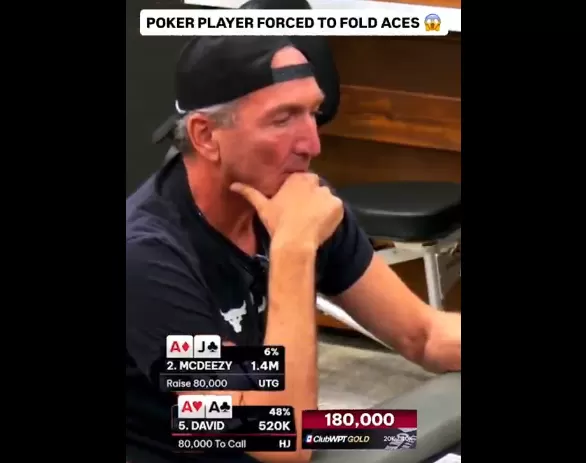
Then Arizona escalated the whole game. On July 10, 2026, the Arizona Department of Gaming hit five operators with cease-and-desist orders, with ClubWPT's online poker platform as the headline name, and the language went far beyond the usual regulatory finger-wagging. The state alleges conduct amounting to three felonies: promotion of gambling, illegal control of an enterprise, and money laundering. Arizona's chief gaming enforcement officer dismantled the industry's entire legal foundation in one stroke, pointing out that "sweepstakes" is not even a defined term under Arizona law, so slapping the word on a poker product buys exactly nothing. The accusations against ClubWPT included the ugly kind: admitting players under 21 into pay-to-play tournaments and dressing it all up with deceptive no-purchase-necessary language. Non-compliance opens the door to criminal and civil action against the companies, their principals, and even employees. The grace period is not just over. It is being prosecuted.
The ClubWPT Contortion Act
No operator illustrates the squeeze better than ClubWPT Gold, the World Poker Tour's sweeps poker platform that launched in February 2025 with a $5 million freeroll and maximum hype. Within a year it had pulled out of Washington, Idaho, Michigan, Montana, Louisiana, Connecticut, New Jersey, and Tennessee, sometimes with less than a week's notice for players to clear their balances. New Jersey players were told to physically drive to Pennsylvania just to submit a withdrawal.
Then came the reinvention. In September 2025, ClubWPT Gold killed its Gold Coin system entirely and rebranded as, of all things, a poker training platform. Players now buy Hand Analysis Credits for an AI review tool (the company acquired Upswing Poker to sell the story), and those purchases happen to come with Chips that happen to be redeemable for cash. For California, the platform was revamped around limited game formats and Game Days, a scheme leaning on a legal exemption for limited and occasional promotions.
The word-game strategy has produced genuinely strange results. When New York's ban was signed in December, ClubWPT locked state players out the same day, then later slipped back into New York under its revamped model, betting that the new structure falls outside the ban's definition of dual-currency sweepstakes. As of July 2026 it still operates in more than 20 US markets. But Arizona's felony-flavored cease-and-desist shows the ceiling on this approach: when a regulator decides the linguistic trick is just a trick, the entire business model is suddenly evidence. Every future ban is being drafted with these workarounds already in mind, because lawmakers read the same press releases everyone else does.
Where the Players Went
Here is the market-share answer nobody in the sweeps industry wants printed. The players did not stop playing poker. They just stopped playing it on sweepstakes sites.
Some moved to regulated rooms where they exist, and the timing is convenient: more states are actively weighing full iGaming legalization, often in the same bills that ban sweeps. Licensed operators lobbied hard for these bans for exactly this reason. They are not cleaning up the market out of civic duty. They are clearing shelf space.
Others went where American poker players have always gone when a door closes: offshore. Crypto poker rooms and club-based apps are absorbing displaced sweeps players at a pace that should embarrass the people who claimed prohibition would protect consumers. Prediction markets are grabbing another slice of the same crowd. The demand never disappeared. It just relocated to places with less oversight than the sweeps sites ever had, which is the most predictable outcome in the history of American gambling policy.
The Bottom Line
Sweepstakes poker is losing market share because the three things it needed are all collapsing at once: legal cover, payment rails, and player liquidity. The dual-currency model was a clever reading of promotional law that worked brilliantly right up until legislatures started reading it too. Industry analysts expect another 8 to 12 states to pass California-style bans by the end of 2027, and with Arizona now waving felony statutes instead of polite warning letters, the cost of staying in grey markets is climbing from lost revenue to personal legal exposure for the people running these companies.
The model is not dead everywhere. Forty-plus states still allow it, single-currency experiments are emerging, and some operators will survive by mutating. But sweepstakes poker specifically, the product that needs a big national player pool to function, has already passed its peak. The golden loophole era ran from roughly 2017 to 2025. What is left is a shrinking map, a hundred lawsuits, regulators reaching for criminal statutes, and a lot of players who already found the next table.