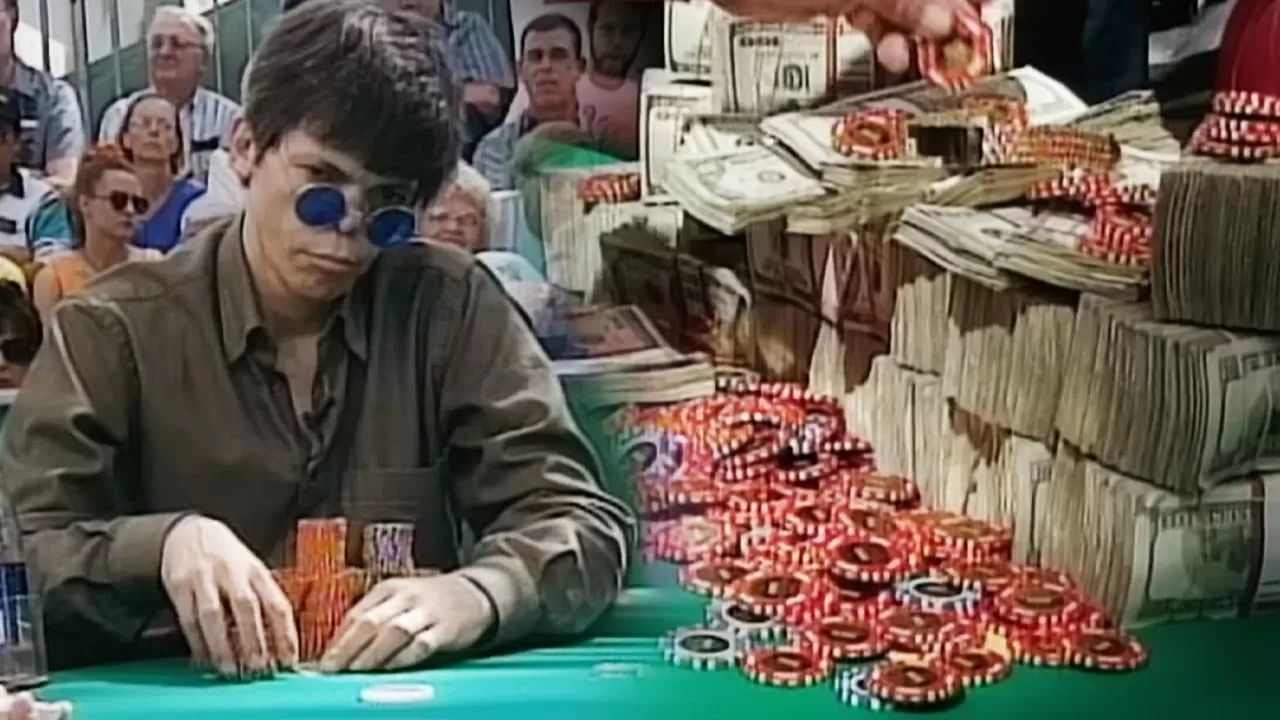

He was 5'4", weighed 120 pounds soaking wet, and could dismantle the best poker players on the planet without breaking a sweat. Stuey Ungar didn't look like a killer. He looked like someone's nephew who wandered into the wrong card room. That was your first mistake. Underestimating him was your last.
If you've been grinding $1/$2 live or battling it out in online MTTs, you've probably heard the name. Maybe in passing. Maybe from that old guy at your local card room who swears he "played with Stuey once." But here's the thing. Stu Ungar's story isn't just poker history. It's a masterclass in the mental game, bankroll destruction, and what happens when raw genius meets zero discipline.
And if you're honest with yourself, parts of his story probably hit uncomfortably close to home.
The Prodigy Nobody Saw Coming
Stu Ungar grew up on the Lower East Side of Manhattan in the 1960s. His father, Isidore, ran an illegal gambling club. By the time Stuey was 10, he was playing gin rummy against grown men. By 14, he was the best gin player in New York City. Let that sink in. Fourteen years old. Beating bookmakers, hustlers, and connected guys who didn't take kindly to losing.
He didn't learn the game from books. He learned it from the street. From watching people. From sitting across from men who'd break your fingers for slow-rolling them. That's an education no poker training site can replicate.
His gin rummy skills were so dominant that eventually nobody would play him. Think about that for a second. He was so good that he literally ran out of opponents. So he did what any degenerate genius would do.
He switched to poker.
The WSOP Runs That Changed Everything
In 1980, Stuey Ungar entered the World Series of Poker Main Event. He was 26 years old, rail-thin, and largely unknown in the poker world. The established pros looked at him like a speed bump on their way to the bracelet.
He won the whole thing.
The following year, 1981, he came back and won it again. Back-to-back WSOP Main Event titles. To this day, only two players have ever done that. Stuey was the first.
Here's what mattered more than the wins themselves. It was how he won. Ungar didn't grind. He didn't nit it up and wait for premiums. He read people the way you read a restaurant menu. Effortlessly. Completely. He'd call all-in with bottom pair because he knew. Not suspected. Not "had a read." He knew.
Mike Sexton, a man not given to hyperbole, called Ungar the best card player he'd ever seen. Not the best poker player. The best card player. That distinction matters. Sexton was saying that Stuey's raw cognitive ability transcended the game itself.
What Weekend Warriors Can Actually Learn From Stuey
Okay, let's pump the brakes on the hero worship and talk about what actually applies to your Friday night game or your online grind. Because there's a lot here.
Hand Reading Is a Skill, Not a Superpower
Stuey's legendary reads weren't magic. They were the product of relentless attention. He watched every hand. He tracked betting patterns. He noticed when a guy reached for his chips differently on a bluff versus a value bet. He catalogued information most players ignore because they're too busy checking their phone or replaying the last bad beat in their head.
The takeaway for your game: You don't need Stuey's IQ. You need his focus. At your next session, put the phone away. Watch every hand, even the ones you're not in. Track how your opponents bet when they're strong. Notice their timing tells. The information is right there. You're just not collecting it.
Most players at low stakes are broadcasting their hand strength like a neon sign. The guy who snap-calls the flop and then tanks the turn? He picked up a draw. The player who suddenly bets exactly pot after checking two streets? He just hit his set. These aren't subtle tells. They're billboards. Stuey would have eaten these games alive.
Aggression With Information Is Unbeatable
Ungar was famously aggressive. But here's the part people miss. His aggression was informed. He wasn't just randomly raising every pot. He was raising because he'd already narrowed your range to three hands and knew you couldn't call.
This is the single biggest leak at low-to-mid stakes. Players confuse aggression with recklessness. They watch poker vlogs, see someone hero-call with ace-high, and suddenly they're clicking buttons like it's a video game.
Controlled aggression means raising when you have a range advantage, not just good cards. It means barreling turn and river when the board favors your perceived range. It means checking back when aggression gains you nothing. It means three-betting preflop with a polarized range, not just aces and kings.
Stuey understood position, range advantage, and leverage decades before those terms entered the poker vocabulary. He was playing "GTO-adjacent" poker by pure feel while the rest of the table was still arguing about whether to limp pocket jacks.
Adaptability Beats Memorized Strategy Every Time
One thing that separated Ungar from his contemporaries was his refusal to play the same way twice. He adjusted to every opponent, every table dynamic, every shift in momentum. Modern GTO enthusiasts could learn something from this. Your solver output is only as good as the assumptions behind it. Against the guy at Table 3 who open-limps 40% of his hands and then folds to any raise, your "balanced" strategy is leaving money on the table.
At the micros and low stakes, exploitative play prints money. Period. If your opponent overfolds to c-bets, bet every flop. If they never fold to river bets, stop bluffing the river. This isn't complicated. It's just discipline. And attention. The two things Stuey had in spades at the poker table.
The Shadow Side: Bankroll Management From Hell
Now we have to talk about the part nobody wants to hear. Because Stu Ungar's story is also one of the most brutal cautionary tales in gambling history.
Stuey won millions of dollars over his career. Multiple millions. And he died in a $46-a-night motel room in Las Vegas in 1998 with almost nothing to his name.
Where did the money go? Drugs. Sports betting. Horses. Proposition bets. Stuey was the textbook definition of a degenerate gambler. His poker earnings were an ATM for every other addiction. He'd win $100,000 on a Tuesday and have it scattered across three sportsbooks by Thursday.
The Bankroll Lesson You Need to Hear
This is where the article gets personal. Because if you're reading this, chances are you've done some version of the same thing. Maybe not cocaine and horse racing. But moving up in stakes after a big win. Taking a shot at a game you can't afford. Playing $5/$10 on a $2/$5 bankroll because you're "running good."
The math doesn't care about your feelings. Proper bankroll management for a serious recreational player means 20-30 buy-ins for your regular cash game stake, 50-100 buy-ins for your average tournament entry, and only moving up when your bankroll supports it, not when your ego demands it.
Stuey was the most talented card player who ever lived and he went broke. Repeatedly. What makes you think you can skip this step?
The Comeback: 1997 WSOP Main Event
After years of self-destruction, Ungar made one of the most dramatic comebacks in sports history. The 1997 WSOP Main Event. He hadn't played in the series in years. Friends had to stake him the $10,000 entry because he was flat broke.
By the time the final table was set, Stuey looked like death. Literally. Years of substance abuse had ravaged his body. He weighed barely 100 pounds. Reporters who covered the event described him as a ghost.
And then he won the damn thing.
His third WSOP Main Event bracelet. A feat that has never been repeated and almost certainly never will be. He outplayed a field of world-class professionals while his body was falling apart. The raw card intelligence was still there, untouched, even as everything else crumbled.
The final hand is legendary. He made a stone-cold read on John Strzemp, calling with bottom pair on a dangerous board because he'd processed every piece of information from the entire heads-up match. It wasn't a guess. It wasn't a gamble. It was Stuey being Stuey.
One year later, he was dead at 45.
The Real Metagame: Managing Yourself
Here's the thing that 90% of poker content won't tell you. Your biggest edge at the table isn't three-bet ranges or pot odds calculations. It's self-management. Tilt control. Bankroll discipline. Knowing when to quit a session. Knowing when you're playing your C-game and having the humility to stand up.
Stu Ungar had the highest poker ceiling of any player who ever lived and the lowest floor. His story proves that talent without discipline is a one-way ticket to a $46 motel room.
Here's what that means for your game right now. Stop playing tired. Stop playing after bad beats because you want to "win it back." Stop playing stakes you can't afford because some reg at the table will think less of you. Stop pretending that poker is "different" from other forms of gambling just because there's a skill edge. The skill edge only matters if you're alive to use it.
How to Apply Stuey's Genius (Without His Self-Destruction)
Let's end with something actionable. Five specific adjustments you can make at your next session.
Focus like Stuey. Pick one opponent per orbit and track their betting patterns through an entire round. What do they do with strong hands? How do they size their bets when bluffing? After one orbit, you'll have more actionable information than most players gather in an hour.
Attack like Stuey. When you identify a weak player, isolate them relentlessly. Raise their limps. Three-bet their opens. Force them to play big pots out of position against you. This is exploitative poker 101, and it's how Ungar built his edge before the term existed.
Adapt like Stuey. If your standard approach isn't working at a specific table, change it. Playing TAG in a game full of calling stations? Widen your value range and tighten your bluffs. Playing LAG in a game full of nits? Steal relentlessly preflop and give up on boards that hit their ranges.
Manage unlike Stuey. Set a stop-loss before you sit down. Three buy-ins. Period. If you lose three buy-ins, you stand up and go home. No exceptions. No "one more orbit." This single rule will save you more money over your poker career than any training course.
Protect yourself unlike Stuey. Poker is not your identity. It's a game you play. The best players in the world treat it like a job. They have hobbies outside of poker. They have relationships. They have bankrolls separate from their life savings. Be a human being who plays poker, not a poker player who occasionally acts like a human being.
The man, the myth
Stu Ungar was, by almost universal consensus, the greatest natural card player who ever lived. He won three WSOP Main Events. He was virtually unbeatable at gin rummy. He could read a poker table like most people read a children's book.
And he died broke, alone, in a cheap motel room at 45.
His story is both aspirational and cautionary. It proves that brilliance at the table means nothing if you can't manage what happens away from it. For every $1/$2 grinder who dreams of moving up, for every weekend warrior who secretly thinks they could go pro, Stuey's life offers the same message.
The cards are the easy part. Managing yourself is the game within the game.
And that's the game you actually need to win.