
Sometime around 2008, during the World Series of Poker Europe, Phil Laak and Antonio Esfandiari were stuck at a feature table that was playing slower than a 1/2 game at a tribal casino on a Tuesday afternoon. They'd already exhausted their usual prop bets. Flop color? Boring. Ace on the board? Done it a thousand times. They even tried betting on the height of the Eiffel Tower but couldn't be bothered to look up the actual answer.
So Laak had an idea. A lazy, beautiful, degenerate idea.
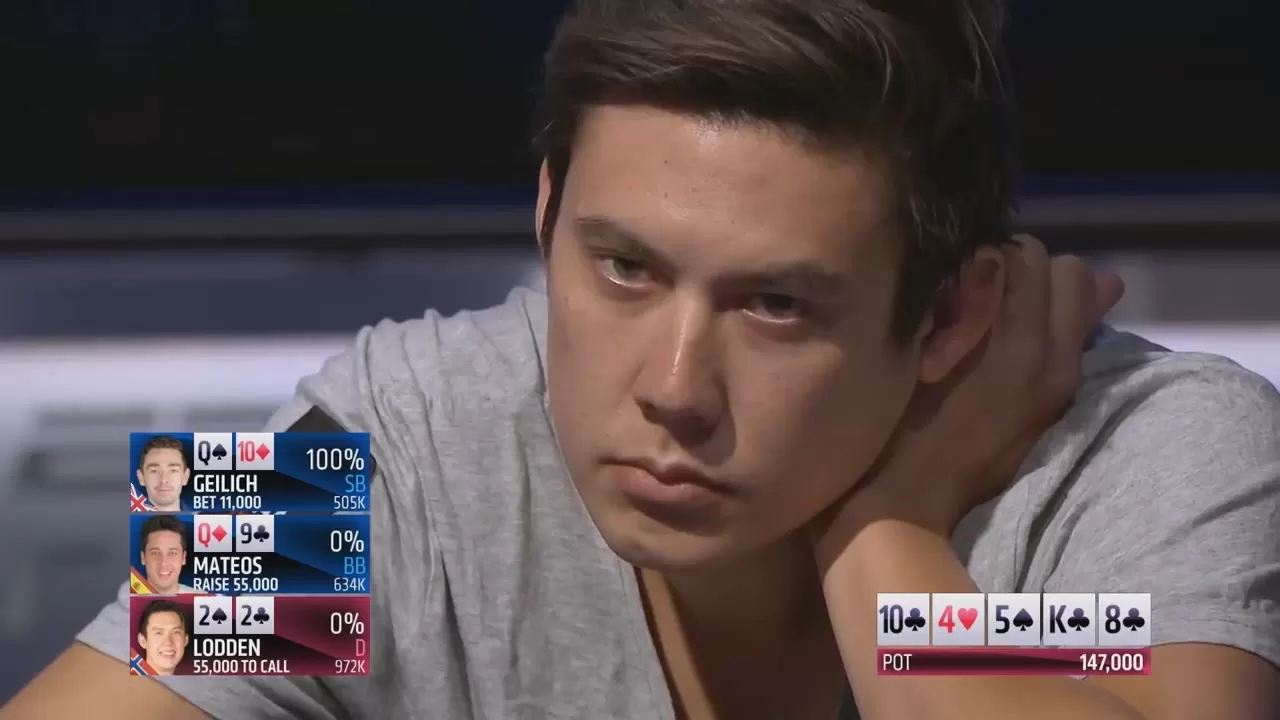
Sitting at the table was Johnny Lodden, a quiet Norwegian pro who at the time was grinding the highest cash games on the Prima Network at stakes like $200/$400 NL. Lodden was legit. He'd run his bankroll up from nothing, gone broke, gotten staked by a friend, and rebuilt. A real grinder's grinder.
Laak's proposition: forget finding the real answers. Just ask Lodden a question, have him secretly write down what he thinks the answer is, and then he and Antonio would bet on Lodden's guess.
That's it. That's the whole game.
The actual truth is completely irrelevant. The only thing that matters is what the person being asked believes.
They played it until the table broke. ESPN gave it its own segment. And within a year, poker players worldwide were playing "Lodden Thinks" for anything from pocket change to five figures.
Johnny Lodden, for his part, didn't seem to mind lending his name to history. He finished 11th in that WSOP Europe Main Event, went home with some cash, and probably had no idea he'd just become a permanent fixture in poker culture. The man has over $3 million in live tournament earnings, made four EPT final tables, and in 2025 came back from a 944-day hiatus to finish runner-up in a High Roller in Cyprus. He was literally on vacation and decided to play. That's the kind of guy who gets a game named after him.
How to Actually Play (It's Stupidly Simple)
You need three people. That's it. Well, three people and something to bet with.
The Setup: One person is "the Lodden." They don't bet. They just answer questions. The other two are the bettors.
The Flow:
Someone asks a question that has a numerical answer. Anything works. "How many countries are in Africa?" "How old is Brad Pitt?" "How many hot dogs could you eat in 10 minutes?" The crazier the better, honestly.
The Lodden secretly writes down or locks in their answer. No peeking.
Now the bettors go back and forth. Player A throws out an opening number. Player B can either accept the under (meaning they think the Lodden guessed lower than that number) or counter with a higher number. They keep going until someone takes the under.
The Lodden reveals their answer. If it falls below the final number, the person who took the under wins. If it's equal to or above that number, the person who bid last wins.
That's the whole thing. You could teach your grandma this game. You could teach your grandma and she'd probably crush you at it because she's been reading people longer than you've been alive.
Where It Gets Interesting (and Expensive)
Here's what separates Lodden Thinks from just guessing numbers at a bar.
You're not trying to figure out the right answer. You're trying to figure out what *that specific person* thinks the right answer is. Different skill entirely. And this is where it mirrors actual poker in a way that no training tool on the market does.
On a 2008 episode of Poker After Dark, Phil Ivey and Doyle Brunson played a round for $10,000. The question was Clint Eastwood's age. Daniel Negreanu was the Lodden.
Now here's where you need to understand how the bidding works, because it looks weird if you've never seen it. Brunson opened at 21. That's not him saying he thinks Eastwood is 21 years old. That's him setting a deliberately low anchor to start the auction. He's basically saying "I'll take everything under 21." If Ivey thinks Daniel's guess will be higher than 21 (obviously), he has to counter with a higher number. So Ivey says 40. Brunson can now either accept the under (everything below 40) or bid higher. He jumps to 60. Now they're getting into real territory. Back and forth: 62, 64, 66, 68. Each counter means "I think Daniel's guess is at least this high." Eventually someone has to stop and accept the under.
Ivey paused and said out loud what everyone at the table already knew: "How dumb is Daniel... let's see."
He wasn't trying to figure out how old Clint Eastwood actually was. He was trying to figure out how old *Daniel Negreanu thinks* Clint Eastwood is. Completely different question.
They settled on 74, Ivey taking the under. Negreanu's answer? 73.
Ivey won ten grand. Brunson shook his head and muttered, "He's 77." Like he couldn't believe anyone could be that wrong about something so obvious. But being right about the fact didn't win him anything. Being right about Daniel's brain did.
There's a beautiful detail from that episode too. Ivey had just lost his entire $20,000 buy-in in the actual poker game. He was getting up to leave. As he stood, Phil Hellmuth reminded him he owed him from an earlier Lodden Thinks round they'd played. The stakes on that one? Ten cents. Not dime as in a thousand. A literal dime. Hellmuth and Ivey had played a round of Lodden Thinks for $0.10 just for fun earlier in the session.
Ivey fished a coin out of his pocket and flicked it across the table. Same session: lost $20K at poker, won $10K on one Lodden bet, paid off another Lodden bet with a coin you'd find in a couch cushion. That's the range of this game. You can play it for a mortgage payment or for less than a gumball.
The Erik Seidel Sock Disaster
This is my favorite Lodden Thinks story and it perfectly illustrates why the game is such a good proxy for poker reads.
Let's go back to 2014. We are in South Africa. Erik Seidel and Dan Harrington had traveled to Johannesburg for a $100,000 buy-in tournament. Only nine players showed up. All pros. Total bust as a tournament.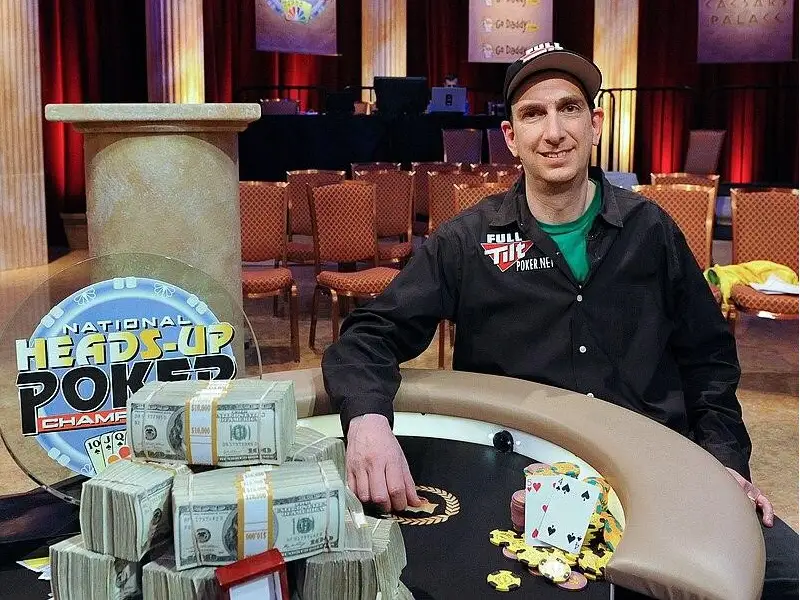
But the trip wasn't a waste. They'd planned a safari, a stay in Cape Town, some tourist stuff. On the morning of the lion park visit, Seidel, Harrington, Dan "Jungleman" Cates, and Antonio Esfandiari found themselves on a bus. Naturally, they started playing Lodden Thinks. Because what else would four poker players do on a bus to a lion park?
Harrington was the Lodden. The question: how much money would it take for you to never wear socks again? Not just for a year. Ever.
Seidel was confident. He and Harrington were old friends. He knew this man. He quickly bid the number up to $500,000. Esfandiari happily took the under.
Harrington's answer: around $160,000.
Seidel lost somewhere between $5,000 and $12,000 on that single question. He was furious. "That's crazy!" he told Harrington. "To never wear socks again? You go to the gym. You exercise. No socks, EVER? Really?"
Here's what makes this story great. Seidel was actually right about his friend. After thinking about it more carefully, Harrington admitted his own answer was probably way too low. He hadn't really thought through what never wearing socks would actually mean.
But Seidel had already lost. Harrington was confidently wrong about his own preferences, and Esfandiari read the moment, not the man's life history. Seidel later said he was tempted to just pay Harrington the $160,000 and force him to live without socks forever.
"Antonio has probably made millions on Lodden Thinks," Seidel said with a laugh. He might not have been exaggerating.
Why This Game Will Actually Improve Your Poker
I know what you're thinking. "Cool story, but how does a party game help me at $2/$5?"
A lot, actually. More than another 100 hours in a solver, I'd argue.
The entire game is built on the same skill that separates break-even live players from consistent winners: the ability to think about what someone else is thinking, not what they should be thinking.
When you're facing a river bet from the guy in seat 7 who's been nursing a Miller Lite for four hours, the GTO solution is irrelevant. What matters is what that guy thinks is a good hand to value bet with. What that guy thinks you'll fold. Whether that guy even knows he's supposed to be thinking about your range at all.
Lodden Thinks trains that exact muscle. It forces you to build a model of someone else's brain and then stress-test it against reality. And you get instant feedback, which is something poker almost never gives you. In poker, you make a hero call and the villain mucks, and you never know if you were right for the right reasons. In Lodden Thinks, the answer comes out immediately. You find out exactly how well you read the person.
Play it enough and you start noticing things about people. The friend who always overestimates numbers. The one who anchors to the first number they hear. The one who's weirdly accurate about geography but clueless about pop culture. That kind of cataloging? That's live poker scouting. You're just doing it in a low-stakes, funny environment where nobody's three-bet bluffing you off a pot.
The Meta-Lesson: People Are Confidently Wrong All the Time
The Harrington sock story isn't just a funny anecdote. It's a warning.
People are confidently wrong about their own behavior constantly. Your opponent says he only plays premium hands. He's three-bet you six times in two orbits. The nit who claims he never bluffs is leading into you on the river with complete air. The LAG who says he's "tightening up" is opening 40% of hands.
In Lodden Thinks, you see this in real time. Someone will tell you they'd never eat a bug for less than a million dollars. Then when they actually think about it for thirty seconds, they lock in $5,000. People don't know their own preferences until they're forced to quantify them.
At the poker table, this translates to: don't trust what players tell you about their game. Watch what they actually do. Read the moment, not the biography.
Best Questions to Get You Started
Look, I've played this with buddies during long tournament breaks and at home games, and I can tell you the best questions are the ones that are genuinely hard to estimate and slightly absurd. Some of my favorites:
"How many times has our Lodden been to a dentist in their entire life?"
"How many people are in this building right now?"
"How much would someone have to pay you to delete all your social media permanently?"
"What percentage of the Earth is covered by water?"
"How many commercial flights are in the air right now, worldwide?"
"How many NBA players are currently over 7 feet tall?"
The beauty is in the stupidity. Nobody actually knows these answers. But everybody thinks they have a rough idea, and the gap between "rough idea" and "actual guess" is where the money lives. Just like poker.
Johnny Lodden: The Man Behind the Name
It would be slightly criminal to write this whole thing and not give Johnny his proper due.
Born in 1985 in Jørpeland, Norway. Started playing poker at 16. Became one of the early legends of online high-stakes NL on the Prima Network when nobody else was playing pots that size. Went broke. Got staked. Rebuilt. The classic poker arc.
He racked up over $3 million in live tournament cashes. Made four EPT final tables, including a third-place finish at the 2013 EPT Monte Carlo Grand Final for over $600,000, where he outlasted guys like Negreanu, Mercier, and Cody. He was a PokerStars Team Pro. Then a PartyPoker team member. Then he kind of just... disappeared.
For 944 days, Lodden didn't play a single recorded tournament. He was done. Or so everyone thought. Then in 2025, while on vacation in Cyprus, he wandered into a Merit Poker High Roller and finished runner-up for $182,700. Like it was nothing. Like he'd been playing the whole time.
When asked if he'd play more, he basically said, "Maybe, but mostly I just like this hotel." Absolutely legendary response.
He also once described his early tournament career by saying he won his first live event in St. Maarten while slightly drunk, just open-raising every hand heads-up until his opponent folded into oblivion. "My friends and I won four out of seven tournaments," he said, as if that was a normal thing.
Norway's poker laws still classify the game as a lottery, not a skill game. Lodden once noted that Espen Jorstad, who won the WSOP Main Event, literally had to move out of Norway to play. The country's most famous poker export can't legally host a game at home.
Sometimes reality is more absurd than anything you could ask in Lodden Thinks.
Bring It to Your Next Home Game. Seriously.
You don't need to be playing $100K buy-in tournaments in South Africa. You don't need Phil Ivey across the table. You need three friends, some chips or a few bucks, and a willingness to find out how badly you misjudge the people you've known for years.
Play it during dealer changes. Play it when someone's in the tank for five minutes. Play it at the bar after the game. The stakes can be anything from bragging rights to beer money to whatever your crew is comfortable with.
Just remember the core principle. The correct answer doesn't matter. What that person thinks the answer is, that's the only thing that matters. And if you can get good at figuring that out, you'll start seeing the poker table differently too.
Doyle Brunson knew Clint Eastwood's real age. Phil Ivey knew Daniel Negreanu's brain.
One of them won ten thousand dollars. It wasn't Brunson.