
Some players want to sit down, play cards, and get paid without uploading a passport, a utility bill, and a selfie of themselves holding both. The reasons range from principled privacy to living in a market the regulated sites abandoned, and the industry has quietly built an entire ecosystem to serve them. This page maps it honestly, including the parts most affiliate sites gloss over.
Because here is the thing nobody selling you a signup link wants to say out loud: at most rooms, "no KYC" really means "no KYC below a threshold." True zero-verification poker exists, we play on it, and it is listed below. But the difference between never-ask, ask-above-a-limit, and ask-whenever-compliance-feels-like-it is exactly the difference that decides whether your cashout clears in ten minutes or sits hostage to a document review. So this page sorts the rooms by what they actually do, not what their marketing says.


What "No KYC" Actually Means
KYC, Know Your Customer, is the identity verification process regulated financial businesses run: documents, address confirmation, sometimes source-of-funds questions. Poker sites inherit it from their licenses and their payment processors. Crypto changed the equation, because a room that banks purely in crypto has no card processor demanding paperwork, and a license from a light-touch jurisdiction may require verification only above certain volumes, or not at all.
The practical taxonomy has four tiers. Zero KYC, ever: no name, no email beyond login, no documents at any withdrawal size. No KYC below limits: anonymous play and cashouts up to a daily or lifetime threshold, documents beyond it. Light KYC: basic details at signup, documents reserved for large or unusual activity. Agent-based: club apps where money moves through a human agent rather than a cashier page, so the site itself never processes your payment at all. Every room on this page is labeled accordingly in its full review.
The Genuinely Anonymous Rooms
SWCPoker is the patriarch of the category, running since the Seals with Clubs era. Everything is denominated in bitcoin, nobody has ever asked a player for a document, and the games retain a wonderful early-internet softness. Ton Poker is the modern take: it lives inside Telegram on the TON blockchain, so there is no app store, no download, and no account beyond your Telegram handle. Deposit Toncoin or USDT and you are dealt in within a minute. Phenom takes the on-chain route, with balances living on Polygon and automated cashouts that no human reviews.
One tier down, BC.Poker runs no-KYC-below-limits on top of BC.Game's enormous crypto cashier, and CoinPoker pairs light verification with high thresholds and instant automated withdrawals. On the agent side, Kings Club PKR and the wider club app world route payments through agents, which is slower to set up but leaves no cashier trail at all.
Anonymous Tables Are Not Anonymous Accounts
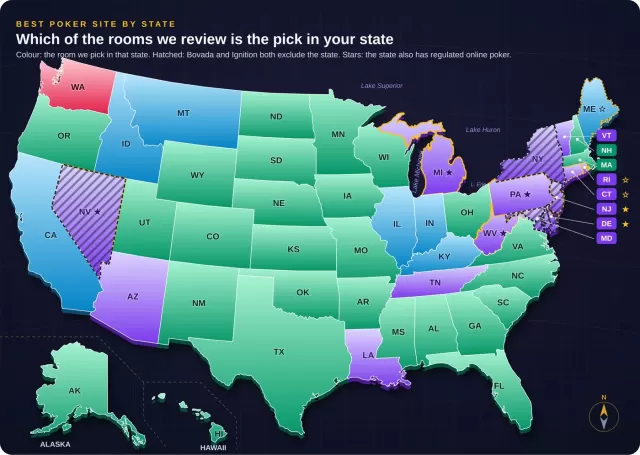
A distinction worth thirty seconds of your attention. Rooms like Ignition and Bovada advertise anonymous poker, and at the table it is true: no screen names, no player histories, no HUD data-mining. But the cashier still knows exactly who you are and will verify your identity on your first withdrawal. That model is excellent protection from predatory regs, and worthless as privacy from the site itself. If table anonymity is what you were actually shopping for, those rooms deliver it brilliantly. If cashier anonymity is the goal, you want the crypto-native rooms above.
Staying Private Without Getting Burned
A few habits separate the players who love this ecosystem from the ones writing angry forum posts. Use a dedicated wallet for poker rather than cashing out straight to an exchange account that is itself fully KYC'd, or the privacy you gained at the poker room evaporates one hop downstream. Our guide on moving money with Bitcoin, Litecoin, and Tether covers the mechanics. Read the terms on regional restrictions before depositing, because a room that never checks documents can still confiscate funds if it decides you played from somewhere its terms prohibit, and with no KYC there is no appeal process with your name on it. And favor rooms with long payment track records over whatever launched last month, since the entire trust model of anonymous poker is reputational. Every room listed here is on this page because that reputation checks out; rooms with documented payment problems do not appear regardless of what they pay affiliates.
Is Any of This Legal?
For players in most of the world, yes, unremarkably so. No major jurisdiction criminalizes an individual for playing online poker, anonymous or otherwise; gambling laws overwhelmingly target operators and payment processors. Your local rules are your own homework, and tax obligations on winnings exist whether or not a poker site knows your name. Privacy from a cashier is not privacy from your tax authority, and pretending otherwise is how people convert a hobby into a legal problem.
Played sensibly, though, anonymous poker in 2026 is simply what online poker felt like in 2005: sit down, play, get paid, and nobody asks for your gas bill. Some of us never stopped considering that normal.