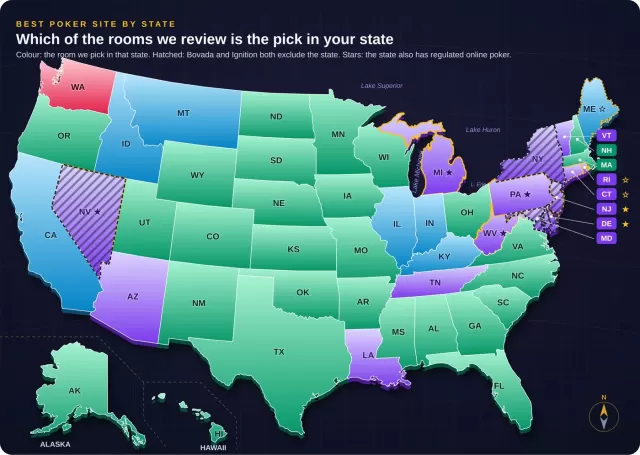
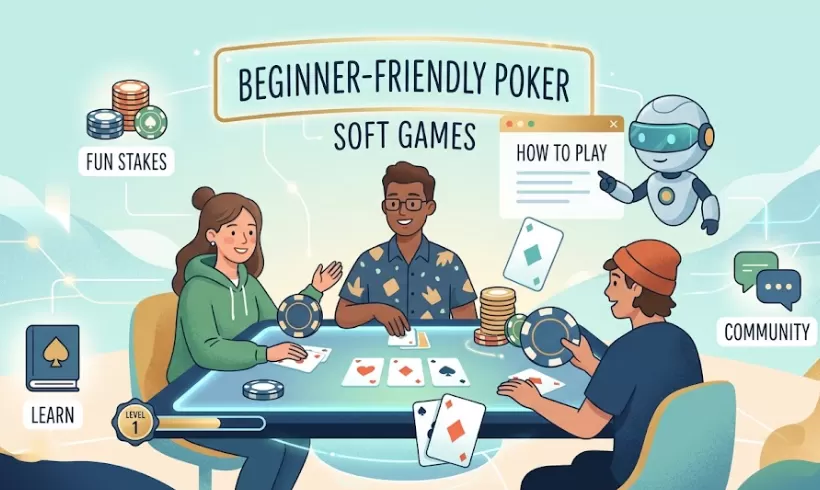
Every poker site on earth claims to be beginner friendly. What they mean is that their signup form is short. What you actually need is a room where the games themselves are gentle: tables full of people playing for fun, calling too much, and not running a solver in the background. Poker players call these games soft, and finding them matters more than any bonus, any app design, and any feature list combined.
This page serves two kinds of readers, and honestly, you both want the same thing. If you are new to online poker, soft games are where you learn without getting buried. If you already win and you are hunting recreational player pools, soft games are where your edge is biggest. Different motives, identical shopping list. Every room below has been tested by us at real tables with real money, and each one earns its spot on the strength of its player pool, not its marketing budget.



What Actually Makes a Poker Site Good for Beginners
Forget the welcome bonus for a second. Four things decide whether a room is a good first home.
The player pool. This is ninety percent of it. A site fed by casino and sportsbook crossover traffic will always play softer than a poker-first site, because people who wandered over from the blackjack tables treat poker like another slot machine. Ignition and Bovada are the textbook examples: both sit on top of massive casino operations, and it shows in every limped pot.
Anonymous tables. Some rooms hide screen names and ban tracking software. That protects new players from sharks who use HUDs to data-mine every mistake you make. If you are starting out, playing where nobody can build a profile on you is a genuine handicap remover.
Stakes that go low enough. You want real cash games from a few cents a hand and tournaments from a dollar or less, plus freerolls so you can play for actual money with zero deposit. A room whose smallest game is $0.50/$1.00 is not a beginner room, whatever the homepage says.
Simple banking. Getting money on and off the site should not require a finance degree. If you are outside the regulated markets, that usually means crypto, and our crypto poker sites hub walks through exactly how that works.
Soft Poker Sites: Where the Fish Actually Swim
Here is the uncomfortable industry truth: game softness is mostly a function of where a site gets its players. Rooms that advertise on poker strategy forums collect poker students. Rooms that advertise during football games collect gamblers. You want the second kind.
The softest waters in 2026 fall into three buckets. First, the casino crossover rooms mentioned above, where recreational money flows in from the sportsbook side all day long. Second, WPT Global, which converts casual fans of televised poker into first-time online players by the thousand. Third, and this is the one most beginner guides never mention, the club-based poker apps. Apps like ClubGG, PPPoker, and PokerBros host private clubs full of home-game players who moved online, and the play in a good club feels like a Friday night kitchen table game, because that is literally what it used to be. Our poker clubs directory lists the clubs we play in ourselves.
One warning in the other direction: the biggest brand names are frequently the toughest games. GGPoker and PokerStars are magnificent products with enormous traffic, and their micro stakes are packed with studied grinders from every corner of the planet. There is no prize for surviving hard games while you learn. Start soft, build skill and a roll, then go pick fights.
How to Spot a Soft Game Yourself
You do not need tracking software to read a table. Sit down, watch two orbits, and count three things. How many players see each flop: four or more limpers per hand means recreational city. How often anyone raises before the flop: passive tables that just call along are soft tables. And how big the average pot is relative to the blinds: huge multiway pots mean people are playing cards, not ranges. If the table fails all three tests, stand up and find another one. Table selection is the single most profitable skill in poker, and it costs nothing to learn.
Mistakes New Players Make When Picking a Site
The classic one is choosing by bonus size. A $2,000 welcome bonus that releases based on rake is worth close to nothing at the stakes you will actually play, while a room with soft $0.02/$0.05 games pays you every session. The second mistake is depositing on the site your favorite streamer plays, since streamers play where sponsorship money lives, which is usually where the games are hardest. The third is ignoring cashout speed until it is your problem. Check our instant withdrawal poker sites page before you deposit, not after you win.
Your First Month, Roughly Sketched
Pick one room from the list above. Deposit small. Play the lowest cash stakes or the cheapest tournaments and treat every session as tuition. Use the free poker tools we have collected, especially the odds calculators, until pot odds stop feeling like math and start feeling like instinct. When you are beating your stake comfortably over a real sample, move up one level, not three. The players who go broke are almost never the ones who lacked talent. They are the ones who sprinted to stakes their skill had not caught up with yet.
And if a game stops being fun, leave. The soft games will still be there tomorrow. That is rather the point of this page.