Another summer, another live poker cheating story. This one didn't come with a livestream graphic or a viral hand history. It came from an anonymous regular who spent two weeks playing against a two-man team at the Aria and slowly pieced together how they were doing it.
The account surfaced on Bart Hansen's YouTube channel. Hansen, the Crush Live Poker founder and longtime voice of the Hustler Casino Live games, took a call from an Aria reg going by "Joe," who laid out what he and other regulars witnessed at the $5/$10 (sometimes $10/$20) cash games during this year's WSOP. These are $5,000 cap buy-in games, real money by any standard, and exactly the kind of soft summer lineup a cheater would target.
The Whale Who Never Guessed Wrong
The first character in this story looked like a gift from the poker gods. He showed up late, usually around 2 or 3 a.m., played a huge percentage of hands, chatted constantly, and showed down trash. Offsuit garbage, three-bet for no reason, the whole act. Every reg at the table had the same thought: protect this game at all costs.
For the first week, nobody blinked. Loose players run hot sometimes. But the pattern got weirder the longer you watched. The guy bluffed relentlessly and somehow never bluffed into the nuts. He played marginal hands like he could see through the deck. Hold pocket sevens on a king-high board and bet, and he'd raise you off it every time, precisely when you couldn't call.
Anyone who lived through the Mike Postle saga knows this profile by heart. Massive range, maximum aggression, and a decision-making accuracy that no human achieves without help. Postle's signature move was the perfect zero-equity bluff against a player holding exactly enough to fold. Joe's whale ran the same script.
The Partner Who Never Played a Hand
The second character is where this story gets genuinely clever. Every time the whale sat down, another player would be at the table too. Quiet. Masked. Nitty beyond all reason. The regs eventually realized that across roughly two weeks of sessions, this man had not voluntarily played a single hand. Not one. Even the tightest nit on earth eventually picks up aces.
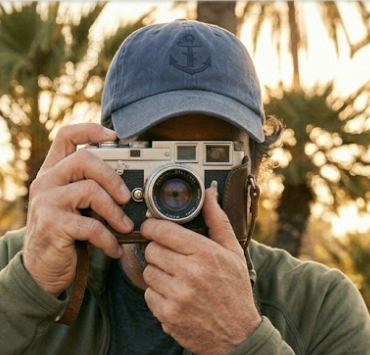
What he did have, every session, was a cap resting on the rail.
Think about the design here. The silent partner never wins a pot, so nobody suspects him of anything. He's furniture. The whale wins mountains of chips, so he draws all the suspicion, but he has nothing on the table, no gadgets, no card protector, nothing to point at. Just headphones, and half the room wears headphones. Split the roles between two people and each half of the operation looks clean on its own.
The working theory, and it matches known cheating tech, is that the cap housed a micro camera capturing low-angle video of cards as they were pitched. That footage gets relayed to a third party offsite, possibly someone parked outside the property, who reads the cards and feeds the information into the whale's earpiece. The headphones weren't for music.
The Cap Test
Once the regs compared notes and connected the two players, they went to the Aria floor with a simple, smart request: don't accuse anyone, just ask the quiet guy to take his cap off the rail.
The floor made the request. The man who had said nothing for two weeks instantly became very talkative. He insisted, unprompted, that he wasn't doing anything wrong and certainly wasn't cheating. Nobody had said the word cheating. The floor asked about a hat.
Then it got better. The silent partner turned to the whale, the man he had spent two weeks pretending not to know, and started speaking to him in Spanish. Two weeks of strangers, dissolved in one moment of panic. Then both men racked up and left at the same time.
None of this is courtroom evidence. All of it is exactly how guilty people behave.
The Casino Shrugged, So the Regs Didn't
The regulars went back to Aria management after the walkout. The answer was the one you'd expect from a casino's legal department: nobody was caught in the act, there's no hard evidence, no ban.
To Aria's credit, the floor at least acted on the initial request, which is more than some rooms manage. But without a smoking gun, the pair remained free to sit in any game they wanted. So the regs handled it themselves. Word went out through the local group chats: two-man team, $5/$10 at Aria, watch for them.
Days later, Joe sat down and spotted the silent partner already seated. Fifteen minutes after that, the whale arrived on schedule. Joe racked up and left without explanation. Another regular at the table went further, telling the whale to his face that the word was out and he believed he was cheating, then warning the players next to him on his way out the door. Within minutes the entire table broke. The team was left sitting alone at a dead game, which is about the best punishment an uncooperative casino ecosystem allows.
One more detail surfaced afterward: the whale had reportedly told people he was already banned from the Wynn and the Venetian. His version involved an argument with the floor. Given everything else, you can draw your own conclusion about what those bans were really for.
The Fix Has Existed the Whole Time
Here's the frustrating part. The poker world has known how to kill this exact cheating method for years, and most American rooms still haven't done it.
A rail-mounted camera works because American dealers pitch cards through the air. Every pitched card offers a fraction of a second of exposure at a low angle, and modern micro cameras only need a fraction of a second. The counter is the slide deal, sometimes called the Euro-slide: the dealer keeps every card flat against the felt and pushes it to the player. The card faces never leave the table. There is nothing for a camera to see.
This isn't theoretical anymore. The slide is already standard across most major operators in Asia. The EPT committed to it starting in 2025. And at the Tournament Directors Association's 2026 Summit, the TDA announced it would train dealers on the slide going forward, with representatives from South Point and the Venetian voicing support from the floor.
The most common objection, that retraining dealers is slow and expensive, took a direct hit at that same summit. A panelist involved with the Asia Poker Tour told the room that his organization taught 200 dealers to slide deal in roughly a single day, and that the technique eliminates this category of cheating outright. Done properly, the slide barely costs any speed. If a room is choosing hands-per-hour over game integrity, that's a choice, not a constraint.
The secondary measure is stricter still: nothing on the felt except chips and cards. No caps on the rail, no card protectors, no phones. It works, but it also strips some of the casual atmosphere that keeps recreational players comfortable, and rec players are the lifeblood of every cash game. The cleaner path is the slide deal, which solves the problem invisibly.
Your local $2/$5 game will be the last place any of this arrives. Cardroom dealers are underpaid, pushed for speed, and rarely retrained. Until the slide becomes universal, the best defense in a live game is the one the Aria regs used: pay attention, compare notes, and don't be shy about breaking a table.
Online, of course, none of this applies. Nobody can film a card that only exists on your screen, and no accomplice controls a certified RNG shuffle. Live poker has its charms, but this summer at the Aria was a reminder that the felt has blind spots the software never will.