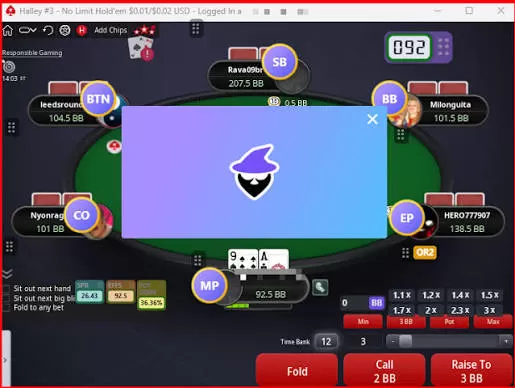
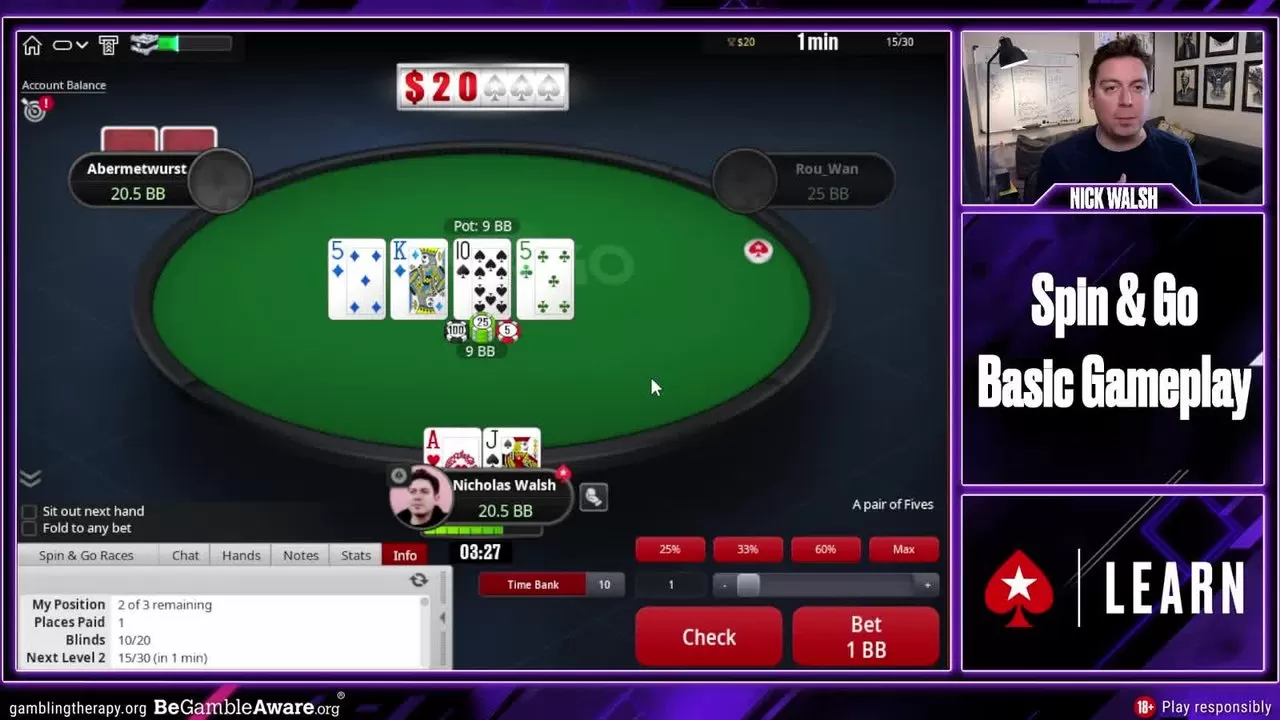

On Tuesday, October 13, 2026, a PokerStars client in Calgary or Edmonton stopped being a poker room and became a cashier. No cash tables, no Sunday schedule, no Spin & Go lottery at 2am, just a balance and a withdraw button. The same morning, 888poker opened a brand new Alberta-only room with a few hundred players' worth of guarantees and a client nobody had downloaded yet. If that sounds like the worst possible trade for the average Alberta grinder, you are reading the situation correctly. It is also, as the regulators see it, the whole point.


Here is what happened, why the biggest poker brand on earth walked out of a province of five million people, and, first, because it is the question everyone actually has, where an Alberta player can still sit down tonight. The wider picture of which rooms take Canadians lives in our GlobalPokerSites.com poker site rankings; the Alberta-specific version is right below.
Where Albertans can still play tonight
Alberta right now has three kinds of table, and they suit three different people. The regulated one is 888poker's new Alberta-only room, covered further down, which is the right seat if you want the province standing behind the cashier and do not mind modest fields. The other two are where most displaced Stars players are actually going.
The international rooms. Be clear-eyed about these: they hold licences elsewhere, not in Alberta, and the province has said it will pursue unlicensed operators after October 13. The AGLC regulates operators, not the people sitting at the tables, but you should know where you are. Not every international room takes Albertans either. WPT Global, for instance, names Alberta, Ontario and New Brunswick on its own excluded-territories list, so do not bother. Of the rooms we rate at GlobalPokerSites.com, two have no Canadian restriction anywhere in their terms and have the traffic a former Stars player will recognise. CoinPoker is the crypto-native option, six-max cash from micro stakes up, weekend majors, and withdrawals that land in your wallet in minutes rather than days, which is exactly the feature you want when you have just watched a room disappear with a week's notice. ACR Poker is the big-field choice, flagship of the Winning Poker Network and home of the Venom and its eight-figure guarantees, with its sister skin Black Chip Poker on the same network. Both will ask for the usual verification, so read the terms yourself before depositing and treat "not restricted" as the floor, not a promise.
The clubs. The option the Reddit thread never mentions, and the one that has quietly absorbed every North American poker exile of the last decade: private clubs on the app platforms. Home games moved onto apps like PokerBros, ClubGG and PPPoker when US players lost their rooms, and Americans have loved them for years for the same reasons Albertans are about to: you pick your club, the games are set by people you can message, and the tables run on North American evening hours. The join flow is the same everywhere: download the free app, apply with the club ID, then message the club so a human approves you. For Albertans the obvious starting point is Loose Kings on PokerBros, which runs on the USA and Canada traffic region and is busiest in the US evening, which is your evening too, with NLH, PLO4, PLO5 and Pineapple plus 5,000 and 10,000 guaranteed tournaments. Loose Cannon on PokerBros is the bigger union with the bigger schedule, up to a 125,000 guarantee on its 150 buy-in. The money side lives with the club, which is the part a first-timer should ask about before sitting down, and the part our club pages walk through.
That is the practical part. Now the story, which is stranger than it looks from the lobby.
Why the exit happened on a Tuesday in October
Alberta did not ban PokerStars. Alberta changed the rules of the game, and PokerStars chose not to sit in the new one yet.
A quick primer for anyone who has not followed Canadian gambling politics, which is most people with a healthy life. Each Canadian province has long had a government monopoly on legal online gambling. In Alberta that was Play Alberta, the provincial site launched in 2020, which offered casino and sports but never poker. Meanwhile an enormous "grey market" of offshore sites, PokerStars included, served Albertans for two decades with no local licence and no local tax bill. Ontario was the first province to break the pattern in April 2022, opening its market to private operators under a local regulator, and it ring-fenced online poker to players physically inside Ontario.
Alberta copied the Ontario playbook. The province passed the iGaming Alberta Act, stood up a new body called the Alberta iGaming Corporation to run the commercial market, and kept the Alberta Gaming, Liquor and Cannabis commission (AGLC) as the regulator. The regulated market went live on July 13, 2026 with 22 approved sites and a launch event in Edmonton, where the AiGC's chief executive Dan Keene said the project "was never about growing the iGaming market, but channelizing and protecting Albertans that choose to participate," according to the corporation's launch announcement. The same announcement put a number on the problem the province was trying to solve: roughly 70 per cent of Alberta's online gambling had been happening on unregulated offshore platforms.
The catch for poker was the transition schedule. Operators that had applied for an Alberta licence but could not be compliant on day one could ask the AGLC for a grace period of up to three months, which ran out on October 13. After that, you either run a locally licensed Alberta product or you stop serving Albertans. Minister Dale Nally, whose portfolio covers the file, told an industry audience in late September that the province would go after any unlicensed operators still standing after the deadline, as Canadian Gaming Business reported.
PokerStars had already pulled its casino and sportsbook from Alberta on launch day in July. Poker rode the grace period to the last possible day. Then the email went out.
What the PokerStars email actually said
PokerStars has not published a press release about Alberta, and its parent company Flutter has said nothing on the record either. Everything players know comes from the notice sent to Alberta accounts on or around Friday, October 9, which several Canadian outlets have paraphrased in near-identical terms (see the CanadianPoker.com summary). The mechanics, as reported:
That last point matters more than it sounds. A player who moved to British Columbia two years ago and never updated the address on file is, as far as PokerStars is concerned, an Albertan. Fixing that means going through verification with support rather than quietly editing a field, and anyone trying to game the geolocation from inside the province is risking the account, not just the session.
What the email did not include was a return date, a return plan, or even a hint. Which brings us to the question everyone on the forums has been asking.
The FanDuel theory, and why it is probably right but not soon
The popular read is that PokerStars will come back to Alberta wearing a FanDuel jersey, the way it did in Ontario. The logic is solid. Flutter, which owns both brands, announced in March 2026 that PokerStars would become "exclusively on FanDuel" in New Jersey, Pennsylvania, Michigan and Ontario, with poker players getting a dedicated client inside the FanDuel ecosystem and a single wallet across poker, casino and sports. Ontario then went through its own awkward gap: the old PokerStars Ontario platform closed on May 7, 2026, and PokerStars on FanDuel did not open its doors until the first week of June after a string of postponements. FanDuel itself is registered with the AGLC in Alberta.
So the brand has a licensed vehicle in the province and a template for the rebrand. Why not just flip the switch?
Because the switch controls a very small room. Alberta's poker rules, as they stand, allow regulated operators to seat Albertans only against other Albertans. No Ontario pool, no international pool. Alberta's population is about 5.1 million according to Statistics Canada's mid-2026 estimate; Ontario's is over 16 million and even Ontario's ring-fenced poker rooms have spent four years fighting over scraps at anything above mid-stakes. Cut that pool by two thirds and you get a market where a C$22 Sunday main event is the headline. Flutter's Ontario numbers were never public, but you do not need them to see why a company that just spent a year merging PokerStars into FanDuel is in no hurry to build a third Canadian poker silo for a province the size of a mid-sized American state.
The real answer is that PokerStars is almost certainly waiting on two things: a liquidity deal between Alberta and Ontario, and a court ruling that could blow the whole thing open. Both are in motion. Neither is finished.
The court case that decides whether Alberta poker ever gets big
On Wednesday, October 7, 2026, six days before the PokerStars shutdown, the Supreme Court of Canada heard a case called Atlantic Lottery Corporation v. Attorney General of Ontario. The question is deceptively dull: can a province that is allowed under the Criminal Code to "conduct and manage" gambling "in that province" let its players sit in peer-to-peer games with people outside Canada? For poker it is the only question. If the answer is yes, Ontario and by extension Alberta can plug their regulated rooms into international pools, and PokerStars has every reason to relaunch at full strength. If the answer is no, Canadian regulated poker stays a set of small, fenced rooms forever, or until Parliament rewrites the Code.
Ontario's Court of Appeal said yes in November 2025, by four judges to one. The lottery corporations of British Columbia, Quebec, Manitoba and the Atlantic provinces, who would rather not compete with an Ontario that can offer world-sized prize pools, appealed. The Supreme Court's own docket lists Flutter, GGPoker's owner NSUS, the Canadian Gaming Association and the Attorney General of Alberta as interveners on Ontario's side, which tells you where Alberta's government stands. The judges were not all persuaded. Justice Malcolm Rowe called Ontario's framing of its own role a "word salad" and said it was "playing with words," while Justice Mahmud Jamal noted that this is, after all, a criminal provision and the federal Attorney General had not bothered to show up, according to Covers' report from the hearing. The court reserved judgment, and nobody at the hearing offered a timeline; a ruling measured in months rather than weeks is the safe assumption.
The middle option is the one to watch. Two consenting provinces can already pool peer-to-peer liquidity under the existing Code, and Keene has said publicly that Alberta and Ontario are working on a memorandum of understanding to do exactly that, telling Canadian Gaming Business in August that "we'll try and get that done as quickly as we can with our friends in Ontario." Quickly, in regulator time, has so far meant more than four months with nothing signed. But an Alberta-Ontario pool would make a PokerStars on FanDuel Alberta launch a near-certainty, because the Ontario client, wallet and licence infrastructure already exist and the room would simply get bigger.
What the regulated side looks like right now
One operator. On October 13, 888poker launched a locally licensed Alberta room, the first regulated online poker the province has ever had. It is a separate download and a fresh account, not a migration; your old 888 international login does not carry over. The player pool is Alberta-only, separate from 888's Ontario room and from its international network, a structure 888's own Alberta product pages describe as a closed pool restricted to players inside the province (PokerNews has the client rundown). The company had telegraphed all of this back in July, when a spokesperson said 888 was "hopeful that Alberta will support shared liquidity with Ontario" and that the launch would depend on "licensing, technical readiness and the final rules governing poker liquidity." It launched fenced anyway, which is either admirable commitment or a bet that the MOU lands before the room gets lonely.
The opening schedule is what you would expect from a five-million-person pool on day one: Hold'em and Omaha cash, turbos, knockouts and Mystery Bounties, with the Sunday flagship reported at a C$22 buy-in and a C$4,000 guarantee. The arithmetic there is worth doing. At C$22 with a standard C$20 plus C$2 split, the prize pool needs 4,000 divided by 20, which is 200 entries, to avoid overlay. A brand new fenced room in a province where most regs just lost their main site is going to struggle to find 200 Sunday runners for a while. That is a polite way of saying there is free money in Alberta for the next few weeks if you are patient and can stomach a C$4,000 Sunday main.
GGPoker deserves a separate paragraph because its Alberta behaviour has been the opposite of PokerStars'. GG never applied in time for the grace period, so it switched Alberta off at the July launch, then spent August getting registered, then went quiet. It has the Ontario precedent too, having launched a fenced Ontario room in 2022 and stuck with it. What it does not have, yet, is an operating agreement with the AiGC, and the company has declined every request for a timeline. The Reddit consensus that GG is "way better" is a fine opinion about software and a useless one about Alberta, where GG currently offers nothing at all.
Is Stars dying, or just leaving
The other thread running through every Alberta discussion is the obituary. PokerStars is finished, the brand is the only thing holding it up, and so on. It is a satisfying take and it is mostly wrong, at least as an explanation of Alberta.
What is true: Flutter has spent 2026 folding PokerStars into FanDuel in every regulated North American market, and in the US that has meant PokerStars as a poker tab inside a sportsbook app rather than a standalone empire. The brand has shed markets it considers too small to bother with, and Alberta on day one of a fenced regime is exactly that. What is not true is that a company intervening at the Supreme Court of Canada for the right to pool liquidity is a company giving up on Canadian poker. You do not hire Bay Street lawyers to argue for a market you have left.
The better frame is the Ontario one. PokerStars disappeared from Ontario for a month in May 2026 and came back inside FanDuel. It has disappeared from Alberta with the same corporate structure in place and the same sister brand already licensed. The difference is that Ontario was worth coming back to immediately, on its own, and Alberta is worth coming back to once it is attached to something bigger. That is not a death. It is a company waiting to see how big the table will be before it buys in.
The housekeeping, and the wait
Withdraw from Stars, or do not; the balance is not going anywhere, but a cashier with no games attached is a strange place to keep a bankroll. Check your account history for refunded tournament entries and converted rewards and make sure the numbers add up before you move the money. If you had a late-year satellite ticket, it is now cash, not a seat.
If you play for volume, multi-tabling and the kind of Sunday that pays for a month, the regulated province currently has nothing for you, and the realistic path to that changing is an Alberta-Ontario pool first and whatever the Supreme Court decides after. Until then the choice is a small legal room, a large international one, or a club full of people who were in exactly your position a few years ago. Watching the AiGC news page is more useful than watching Reddit, but it is not a substitute for a seat, and the seats are listed at the top of this page.
Sources: Alberta iGaming Corporation launch announcement · Supreme Court of Canada, file 42141 · Covers, Supreme Court hearing report · Covers, PokerStars on FanDuel announcement · Canadian Gaming Business, GGPoker licence and Keene MOU comments · Canadian Gaming Business, October 13 deadline · CanadianPoker.com, player notice summary · PokerNews, 888poker Alberta · Statistics Canada estimates via Daily Hive
18+. Online poker in Alberta is regulated by the AGLC; play only on sites licensed where you live, set deposit limits, and if gambling stops being fun, help is available through the Alberta Health Services helpline at 1-866-332-2322.