

PPPoker has been quietly doing the unglamorous work lately. The app landed on Steam, the menus have stopped feeling like a maze, and the update notes have shifted from "various bug fixes" to actual features people asked for.
The latest release brings two of them. One changes what happens at the table. The other changes how players tell PPPoker what to build next.
Neither is revolutionary. Both are more interesting than they sound.
What Is the PPPoker Sushi Game?
The Sushi Game is a side-pot format that has been floating around Asian private club apps for a while, where operators tend to be less precious about inventing rules that turn a routine orbit into a bloodbath.
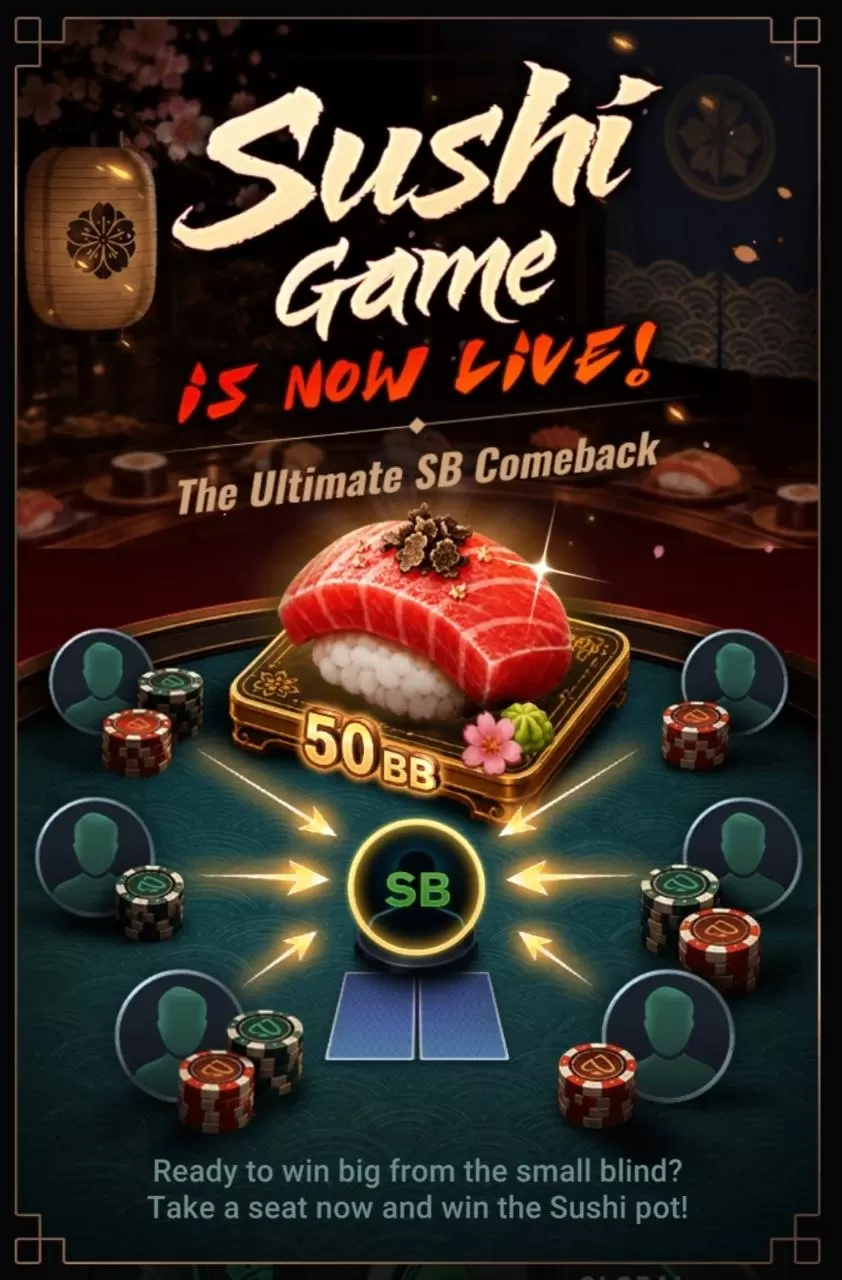
The hand itself is normal. Cards are dealt, players bet, the main pot gets settled the way it always does. The twist sits on top: an extra Sushi Pot tied permanently to the small blind seat.
Here is how it resolves.
If the player in the small blind wins the main pot alone, that player also scoops the entire Sushi Pot. Sole winner. No exceptions.
If the small blind does not win the main pot outright, the Sushi Pot stays on the table and carries over to the next hand, and the new small blind has to post an additional small blind ante into it.
That covers a wider set of outcomes than most players assume on their first orbit:
- The small blind loses the hand.
- The main pot is chopped, even if the small blind is part of the chop.
- The board is run more than once and the small blind fails to win every run.
A split is not a win. Winning two of three runouts is not a win. The bar is total control of the main pot, and everything short of it feeds the pot for the next player.
So the Sushi Pot compounds. Every failed orbit adds another ante, and it keeps swelling until somebody finally holds the small blind and takes the whole thing down clean.
Why It Actually Changes the Table
The mechanic looks cosmetic on paper. It is not, and anyone who has played a few laps of it will tell you the same thing.
Once the Sushi Pot gets meaningful relative to the stakes, the small blind stops being the worst seat at the table and starts being the seat everyone is watching. That seat has extra equity in every pot it plays, which means it defends wider, three-bets lighter, and takes lines it would never take in a standard game.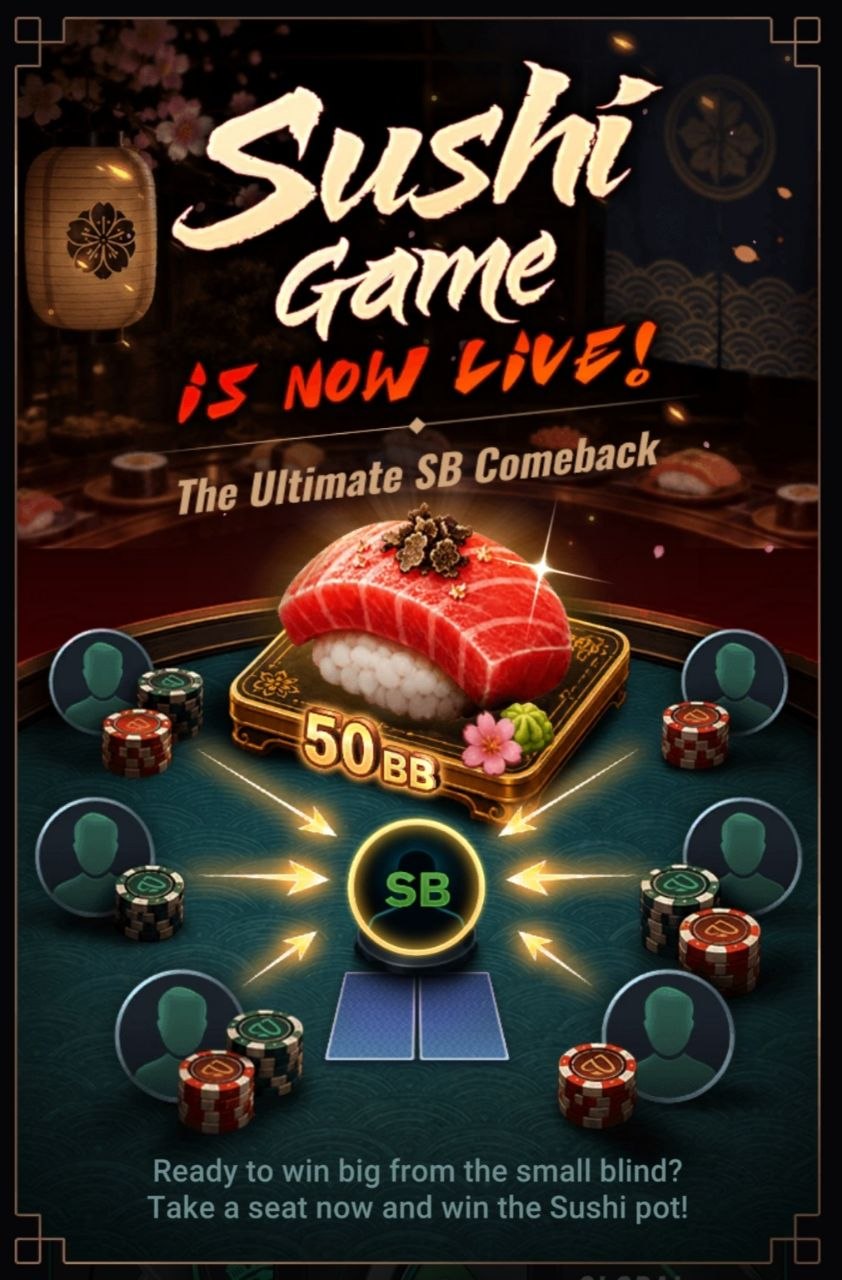
The rest of the table adjusts in the opposite direction. Some players start attacking the small blind harder to deny it a clean win, because a chop is functionally a block. Others go passive and look for cheap showdowns rather than hand the small blind an uncontested pot.
Both adjustments are exploitable. Neither is obviously correct. That ambiguity is the whole point of the format, and it is why these games generate action that a straight NLH table never produces.
Worth keeping in mind: the Sushi Pot is funded entirely by the players. It is not a promotional jackpot. If you sit in one of these games for a long session and never win the pot outright from the small blind, you have been paying an extra ante every orbit for the privilege. Factor that into your stakes selection the same way you would a straddle game or a bomb pot table.
What Happens If You Leave the Table
Money already contributed to the Sushi Pot is gone. It does not come back.
If a player leaves before the pot is won, whatever they paid into it stays in the game for whoever inherits the seat.
It is an obvious rule and a necessary one. Without it, players would drip a few antes in, watch the pot fail to hit, and quit for a refund. The pot would never grow and the format would collapse in a week.
Hole Cards Get Shown When the Sushi Pot Is Won
PPPoker added a transparency rule that other apps should copy.
When the small blind wins the Sushi Pot, every player who was still in that hand has their hole cards revealed automatically at showdown.
Nobody has to request a hand history. Nobody has to argue in club chat about whether the pot was awarded correctly. The table sees exactly how the hand played out and exactly why the money went where it went.
For club owners running these games, that is one entire category of player complaint eliminated before it starts.
The Sushi Game Is Also on X-Poker
The format is not brand new to the private club ecosystem. X-Poker has been running it, and we have covered the app, its game menu and its club structure in our full X-Poker review.
PPPoker's version is its own implementation, and it arrives on a much larger traffic base. For active rooms, Club IDs and new additions, check our full list of PPPoker clubs and unions. We update that page as clubs, games and traffic change.
The New PPPoker Wishing Wall
The second feature is the Wishing Wall, and it has taken over the Forum button in the main menu.
The forum is not gone. It moved to the Profile section, and it still works the way it always did for sharing hands and talking to other members. PPPoker just decided the prime menu real estate was better spent on something else.
They may be right.
Ask PPPoker for a New Feature
Any player with at least 50 hands under their belt can post a wish.
The concept is exactly what it sounds like. You tell PPPoker what feature, format or fix you want to see, and the development team decides what is worth building. A letter to Santa, except Santa has a product roadmap and a QA backlog.
Posting a wish guarantees nothing. What it does is give regular players a direct line into the app instead of hoping their club owner forwards a complaint up the chain. Wishes get upvoted, popular ones climb, and the ones with real support are visible to the people who write the code.
Players Can Vote in Official Polls
The Wishing Wall also has a Polls tab, and these are written by PPPoker rather than the community.
The live one asks what players want to see in the second half of the year. Multiple choice, 2,232 votes in, closing on 13 August 2026. The standings:
Read that top line next to the Sushi Game launch and the strategy is not subtle. New game variants are what the player base wants most, and PPPoker just shipped one. Events in second place is a signal for club owners and union managers about where to point their scheduling.
The AI hand analysis number is the one to watch. Twenty-two percent support for a built-in analysis tool inside a private club app raises questions that PPPoker will have to answer carefully, given how club apps generally feel about assistance software.
The polls beat guessing. PPPoker asks a direct question, sees the votes, and finds out which ideas have actual backing rather than which ideas got shouted loudest in a Telegram group.
A Useful Update for Players and Club Owners
The Sushi Game gives private clubs another action format, particularly the rooms serving Asian traffic where these side-pot variants already have an audience. Club owners get a table type that generates volume without needing a promotion budget behind it.
The Wishing Wall gives the community a route to the developers that does not run through three layers of agent.
Neither feature is going to move the traffic charts on its own. Together they say something more useful about where PPPoker's attention is: one adds something to the tables, the other helps decide what gets added next.